Planning a tidy pantry shelf
A short, practical guide to measuring your space and choosing storage that actually fits. No special tools required — just a tape measure and a few minutes.
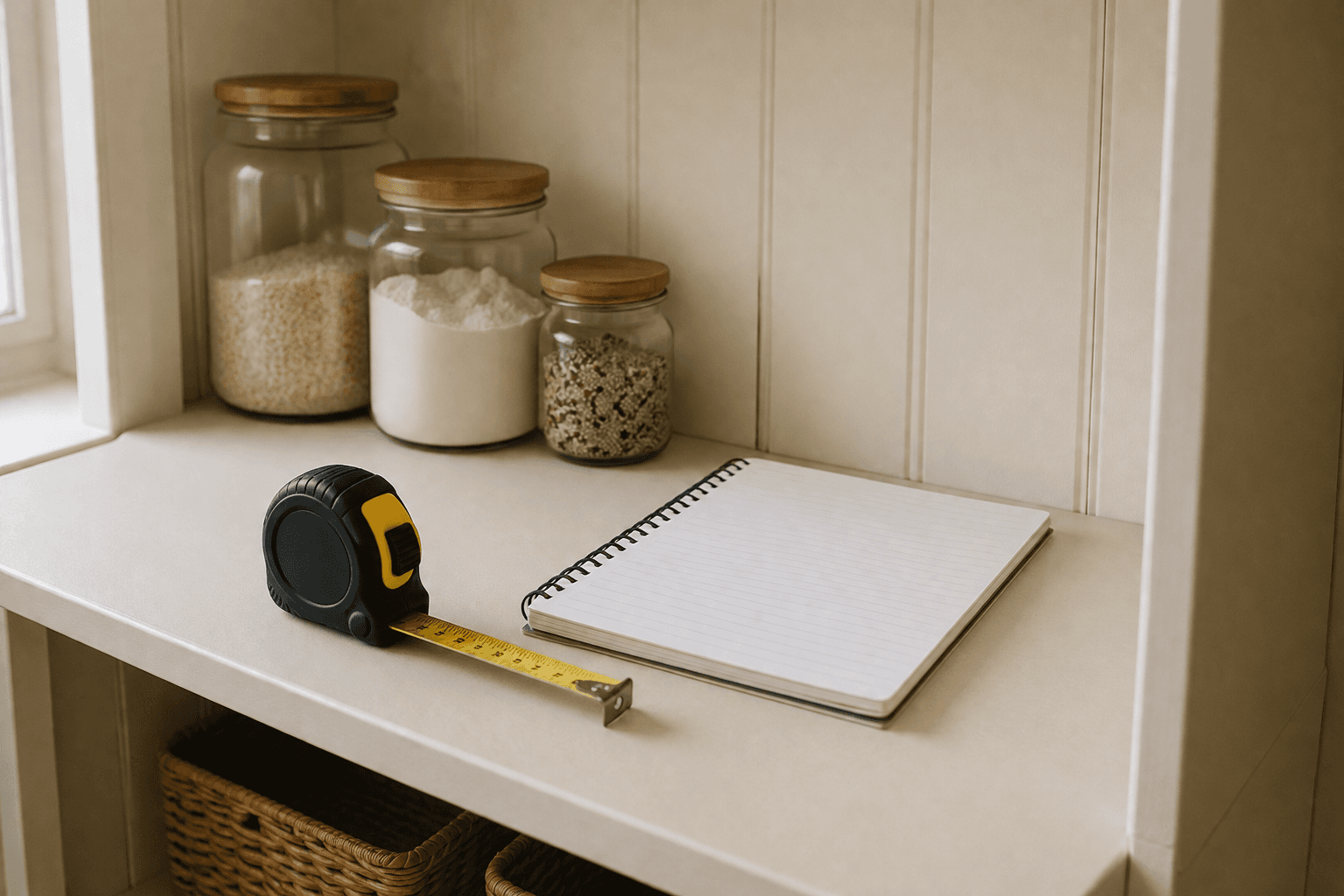
1. Measure before you buy
Measure the width, depth and height of each shelf opening. Note the smallest height in a run of shelves — that is the figure that decides which jars and canisters will fit standing up.
- Width: edge to edge of the usable shelf.
- Depth: front edge to the back wall.
- Height: shelf surface to the underside of the shelf above.
Every product page lists exact dimensions. Compare them against your shelf measurements before adding to the cart.
2. Jars or canisters?
Clear glass jars let you see what is inside and how much is left, which suits pasta, oats, flour and pulses. Ceramic canisters keep light out, which suits coffee, tea and sugar. Many kitchens use both.
3. Use height with risers and racks
If your shelves are tall and half empty, a riser or a tiered shelf organizer turns dead air into a second usable level. Keep everyday items on the lower level and back-ups above.
4. Keep the counter clear
A counter tray or utensil crock gathers the few things you use daily into one spot, so the rest of the worktop stays open for cooking.
5. Look after your storage
Wooden items last longest when hand washed, dried and occasionally re-oiled. Glass and most stoneware are dishwasher safe — check the care note on each product page to be sure.